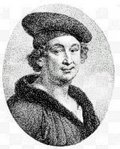
The poem
Men my brothers who after us live, have your hearts against us not hardened. For—if of poor us you take pity, God of you sooner will show mercy. You see us here, attached. As for the flesh we too well have fed, long since it's been devoured or has rotted. And we the bones are becoming ash and dust.
Of our pain let nobody laugh, but pray God would us all absolve.
If you my brothers I call, do not scoff at us in disdain, though killed we were by justice. Yet þþ you know all men are not of good sound sense. Plead our behalf since we are dead naked with the Son of Mary the Virgin that His grace be not for us dried up preserving us from hell's fulminations.
We're dead after all. Let no soul revile us, but pray God would us all absolve.
Rain has washed us, laundered us, and the sun has dried us black. Worse—ravens plucked our eyes hollow and picked our beards and brows. Never ever have we sat down, but this way, and that way, at the wind's good pleasure ceaselessly we swing 'n swivel, more nibbled at than sewing thimbles.
Therefore, think not of joining our guild, but pray God would us all absolve.
Prince Jesus, who over all has lordship, care that hell not gain of us dominion. With it we have no business, fast or loose.
People, here be no mocking, but pray God would us all absolve.
I'm not sure if it's the translation of this poem--but the inverted word order makes the poem a bit jerky. Perhaps that ties in to the fact that the poem is in the voice of hanged men. A moral lesson, the literal situation, the plead (these men do not want to be condemned to Hell) for praying, and the most elusive one--a tone of denial or conning are all present in this poem. "With it we have no business, fast or…
Read the whole commentI'm not sure if it's the translation of this poem--but the inverted word order makes the poem a bit jerky. Perhaps that ties in to the fact that the poem is in the voice of hanged men. A moral lesson, the literal situation, the plead (these men do not want to be condemned to Hell) for praying, and the most elusive one--a tone of denial or conning are all present in this poem. "With it we have no business, fast or loose" makes me wonder why the men think that. Are they criminals, or innocent people being punished? If the former, then I immediately think about the bibical scene of the the two thieves condemned to die with Jesus--the one thief felt if Jesus was the son of God then he should get them released; the other thief admitted that they were criminals and deserved to be punished. So-one thief was still wrangling for freedom, while the other submitted to the punishment.
The stanza which describes the men's bodies being rain washed is gory. The horror of the punishment is given a voice. In an age where there was no media, words had to convey the event, and Villon--I think, did with this stanza. It is haunting, you can actually see the men swaying in the wind, and begin to think about the small fact that they didn't sit for hours, that they have been exposed to the sun so long that they were cooked--and then the added horror of the bird of death,ravens, picking away at them. The men are at the mercy of Nature, prey and on-lookers. The law has condemned them, and their last chance is to reach out by plea for a praying person to look beyond the crimes committed and intercede for mercy from the throne of God.
Villon's Last Ballade
If anyone is interested, I've just finished composing (in English) a poem one might call a companion-piece to Villon's celebrated "Ballade of the Hanged Men". Can send by e-mail to inquiring parties.