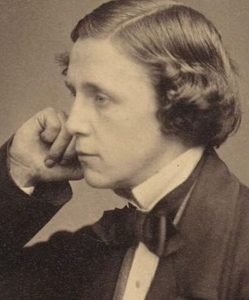
The poem
'Twas brillig, and the slithy toves did gyre and gimble in the wabe. All mimsy were the borogoves, And the mome raths outgrabe. "Beware the Jabberwock, my son! The jaws that bite, the claws that catch! Beware the Jubjub bird, and shun the frumious Bandersnatch!" He took his vorpal sword in hand: Long time the maxome foe he sought- So rested he by the Tumtum tree, And stood a while in thought. As in uffish thought he stood, The Jabberwock, with eyes of flame, Came whiffling through the tulgey wood, And burbled as it came. One, two! One, two! And through and through The vorpal blade went snicker-snack. He left it dead, and with its head He went galumphing back. "Has thou slain the Jabberwock? Come to my arms, my beamish boy! O frabjous day! Calloh! Callay! He chortled in his joy. 'Twas brillig, and the slithy toves Did gyre and gimble in the wabe: All mimsy were the borogoves, And the mome raths outgrabe.
Was there another name for this poem?
Did this poem appear in any books
I may only be 12 years old, but I understand the meaning of this poem. I'm good at understanding nonsense poems, and songs. Anyway, a father sends his son out into the world. With a weapon of memories, and knowledge from his father, the weapon is the Vorpal. The Jabberwock is life's challenges, he uses the vorpal, or life lessons from his father, to slay life's challenges. But, it's rough, because, 'he comes galumphing back' which most likely means limping. This poem is of a boy, a father, life's battles, and accomplishing them with knowledge and memories from his father. E-mail me if you have any comments or questions about this poem, even though I'm only 12 years.
1) so rested he BENEATH a TumTum tree
2) came whiffling through the tulgy WOOD[S]
I think that the poem is brilliant when I was younger we used to imaine what it lookee like an draw it we also played a game pretendinoe of us were the jabberwocky
Lewis Caroll also known as Charles Dodgson wrote this poem for Through the Looking Glass. I don't know if it's been called anything else bar Jabberwocky though.
I love this poem for the way it sounds spoken, I find myself remembering odd lines at weird times and say them just to hear it: All mimsey were the borograves and the mome raths outgrabe. Yay.
Not all the words are nonsense words, Gyre for example is often used in poetry and means to turn in a circular manner and Chortle is used exactly how it is in the poem.
This is a poem I recommend.
Was a fun game we played as cubs in good ole USA Houston Tx. Would anyone Know it? Or would any one know if it, the skitch was based on the poem Thanks
My own thoght. Is it is all about life. In the Line"Beware the Jabberwocky,my son" This is a father trying to prepare his chid for what layed ahead in the world.He want to prepare is son for the choices that are all around us.We also,sometimes do not come away unscathed form our choices. But, when we return home all is forgiven by family and friends. Let me know your thought also. Joey Richardson
If you read the author's comments on the poem, you would see that this poem has very little to do with symbols at all. Carroll meant it as literal that the child is being sent to slay the Jabberwock and at the end of his journey he returns to his home/village to be celebrated upon.
hey,
can you please translate this to english. like i'm looking for the same story, but in a way that a child can understand!
thank you
Hello,
I think more things obout The Jabberwocky, surely its a monster, perhaps a dragon (did you see Tenniel's Picture?), and the Hero (the son of the poem), as Beowulf,or as David, the King, goes to battle against it, although the monster can kill him. But by the reason he is a young hero, he kills the monster, and then he comes back to his mother, (the town, the country), and there he is received with great joy.
Amlodi from Argentina
Heck yea! Where did you all find grammar for the translations from English to Elvish? I'm trying to find a teacher site. =/
Claire, you know that chortle was a word that L.C. came up with? Nonsense words aren't usually complete nonsense, their point is the connotations, and this was originally one of these.