The poem
My daughter plays on the floor with plastic letters, red, blue & hard yellow, learning how to spell, spelling, how to make spells.
*
I wonder how many women denied themselves daughters, closed themselves in rooms, drew the curtains so they could mainline words.
*
A child is not a poem, a poem is not a child. There is no either / or. However.
*
I return to the story of the woman caught in the war & in labour, her thighs tied together by the enemy so she could not give birth.
Ancestress: the burning witch, her mouth covered by leather to strangle words.
A word after a word after a word is power.
*
At the point where language falls away from the hot bones, at the point where the rock breaks open and darkness flows out of it like blood, at the melting point of granite when the bones know they are hollow & the word splits & doubles & speaks the truth & the body itself becomes a mouth.
This is a metaphor.
*
How do you learn to spell? Blood, sky & the sun, your own name first, your first naming, your first name, your first word.
This is one of my favorite poems ever. I love the idea of words as power. I'm addicted to words, so I "mainline words."
This is clearly a feminist poem that elucidates on the historicity of women's suffering as a result of both torture and their silencing in all walks of life.The solution seems to be the power of words that can allow women to empower themselves.Finally it is language that acts as the instrument of power that can awaken humanity especially towards the cries of women,some often unheard.There is both beauty and pathos in the poem as it pays a tribute to women and at the same time conveys their vulnerability.
wht is spelling
i want the summary of the poem
The a amazing thing in this poem is that it includes
past, present and also future at the same time. I think it very intelligent form Atwood's to write such words and has such "power" to set them in this way !
I wrote an analysis for this poem, someone might find it useful, one way or another: Spelling - Margaret Atwood Techniques: Repetition Repetition is used for emphasis for effect in several places in the poem, specifically in “how to spell, / spelling, / how to make spells”, “a child is not a poem, / a poem is not a child”, “A word after a word / after a word” and “your own name first, / your first naming, your first…
Read the whole commentI wrote an analysis for this poem, someone might find it useful, one way or another:
Spelling - Margaret Atwood
Techniques:
Repetition
Repetition is used for emphasis for effect in several places in the poem, specifically in “how to spell, / spelling, / how to make spells”, “a child is not a poem, / a poem is not a child”, “A word after a word / after a word” and “your own name first, / your first naming, your first name”.
Fragmented thoughts
Fragmented thoughts (almost like stream of consciousness) are used for flow and emphasis in several places, “& the word / splits & doubles & speaks / the truth & the body itself becomes a mouth.”
Symbols:
Words/Letters
In the poem, words and letters and the ability to express yourself are exhibited as characteristics of power (“A word after a word/ after a word is power”) that is fundamental but can be taken away: “tied together by the enemy / so she could not give birth” where the tying can be symbolic of the inability to express feelings or emotions, giving birth symbolic of creation (writing poetry or prose).
Allusions
There is an allusion to the Salem Witch Trials where the witches were burned (“Ancestress: the burning witch”). The poem frequently alludes to spell craft and the performance of spells and rituals, which ties the allusion to the Trails into the poem’s theme.
Author:
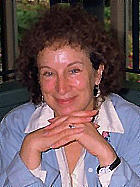
Margaret Atwood was born in 1939, in Northern Ontario. She is a feminist and is very socially involved in politics and the environment. She has one daughter named Eleanor. She is best known for her poetry and many of her poems and novels included feminist themes and ideals. It is also interesting to note that on of Atwood’s ancestors was persecuted as a witch.
Theme:
The poem’s theme is empowering oneself through the use of words: poetry, prose, spells, etc, but more specifically, the poem is geared towards females. The frequent references to witches, present and past, gives the feeling that words can be the very source of a kind of magic, and can transcend all barriers.
The mother looking over her daughter learning how to spell is probably excited that her daughter is following the tradition of her “Ancestress” in a way, since both a witch and an author are both powerful through their use of words. The poem might be from Atwood’s point of view watching over her daughter Eleanor.
Atwood's daughter's name is Jessica.
comment
torture is a poem about womens suffering and its prolonged