A collection · 6 poems
Poems about the sea
Six sea poems: the call to sail, the rhythm of waves, grief on the shore and wind arriving from far away.
Published
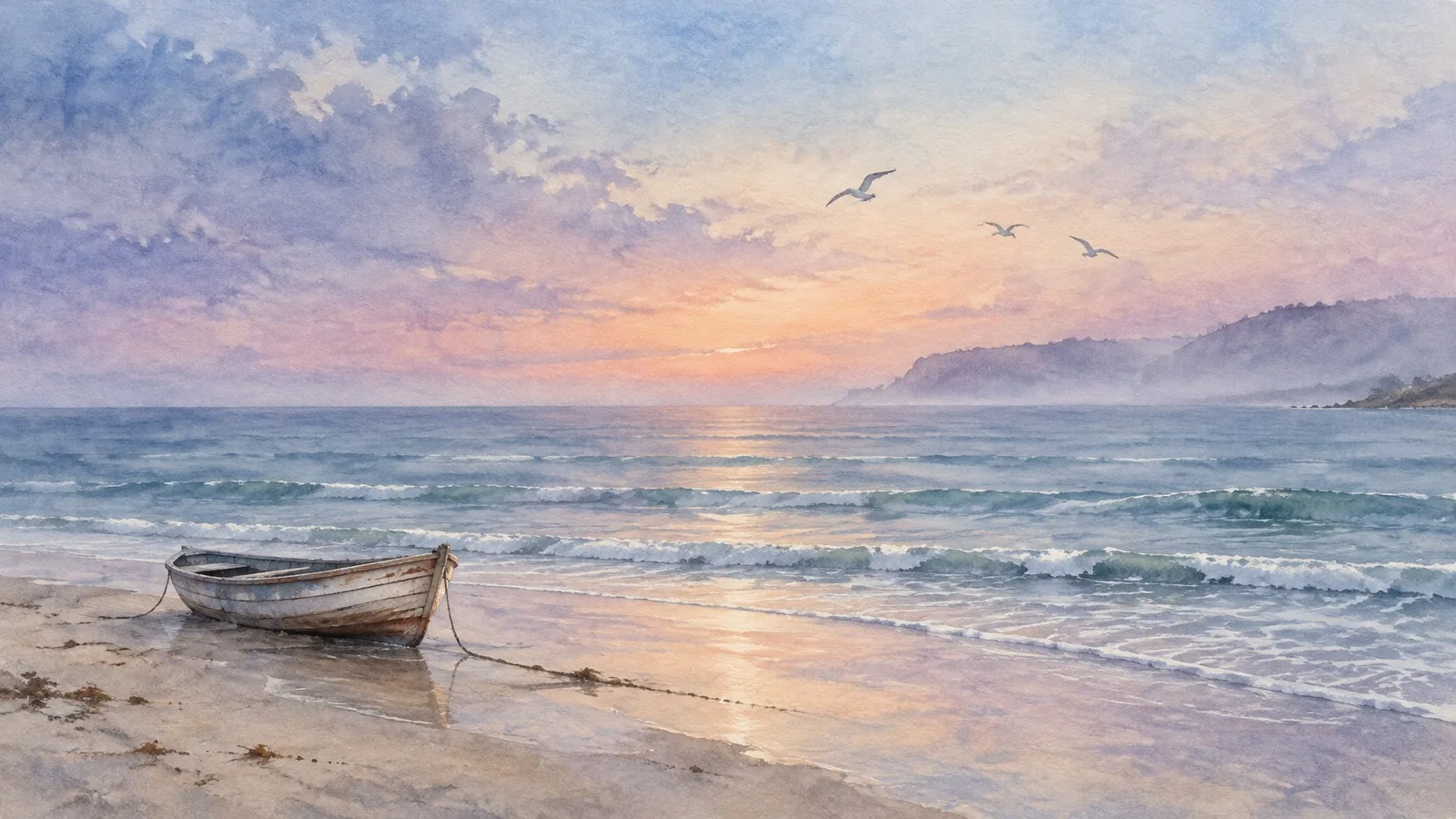
In these six poems about the sea, you encounter water as a summons to sail, a measure of passing time, and a presence beside human grief. Each reading begins with something physical: a moving tide or the sound of water against a shore. You follow the speaker’s attention as those details gather emotional meaning.
You also meet different relationships with repetition. Returning waves promise renewed adventure to one speaker and sharpen another’s awareness of permanent loss. A distant view offers apparent calm; listening unsettles it. Across the selection, you move between the sea’s observable motions and the meanings a human voice draws from them.
Sea Fever: John Masefield
In Sea Fever, you hear the desire to return to sailing gather force through repetition. Each stanza renews the speaker’s sense of necessity, then gives that longing a physical setting. The requested ship and guiding star establish a life organized around navigation, with the open sky supplying direction across an otherwise unmarked expanse of water.
You feel the voyage through the wheel’s resistance and the sail’s movement, while wind and seabirds fill its soundscape. Mist obscures the sea at dawn; spray reaches toward the sailor. These details give the longing a bodily immediacy, and the later comparison between wind and a sharpened blade adds discomfort to the desired freedom of wandering.
By the ending, you find companionship within that wandering life: another traveler’s story belongs beside the gulls and whales. The closing wish for sleep after a long spell of duty brings rest into the speaker’s desire. You might hear a suggestion of life’s ending, though the immediate setting remains a sailor’s completed watch and the prospect of peaceful sleep.
The spring sea rising: Yosa Buson
With The spring sea rising, you enter a stretch of quiet duration shaped by repeated movement. In Robert Hass’s translation, the water’s upward and downward motion occupies nearly the entire poem. The small amount of language keeps your attention close to that movement, with spring supplying a seasonal setting and daylight extending the observation.
As you read, the repeated actions make the brief poem feel capable of continuing beyond its final word. Each downward movement prepares another upward one, so the ending leaves the sea in motion. You receive very little information about the observer; the sustained attention itself gives you a sense of someone remaining beside the water through the day.
After Masefield’s urgent return to sailing, you experience a quieter relationship with recurrence here. The sea holds your gaze through an ordinary action that continues without a destination. In this English version, the placement of repeated words across the short lines gives you a measured reading pace, while the reference to the whole day enlarges the moment you have just witnessed.
Dover Beach: Matthew Arnold
Your reading of Dover Beach turns from visual calm toward an increasingly troubled act of listening. The opening gives you moonlit water between England and France, with distant light and substantial cliffs. When the speaker directs a companion’s attention toward the shore, the waves’ movement over pebbles introduces a harsh sound into that peaceful view.
You then follow the speaker from an audible coastal detail into reflections on human suffering. The reference to Sophocles extends that response across time and places, before the poem introduces the Sea of Faith. At this point, you have moved into metaphor: the retreating water represents the withdrawal of a once-encompassing religious assurance in the speaker’s account of the world.
The appeal to a beloved person gives you a human relationship to consider amid that loss of assurance. Mutual faithfulness becomes the speaker’s urgent request, while the closing image places human beings within confused conflict and darkness. You leave the literal shoreline behind in that image, though the earlier sound of withdrawing water continues to shape the poem’s emotional movement.
Break, Break, Break: Alfred Lord Tennyson
In Break, Break, Break, you confront grief through the difference between continuing coastal life and a speaker’s irrecoverable loss. The waves strike stone with an insistence the speaker’s own voice struggles to match. You hear that difficulty immediately: thoughts rise within the grieving person, while the language needed to express them remains painfully out of reach.
Around that arrested speech, you encounter the sounds of other lives proceeding. A fisherman’s children play together, and a young sailor sings from his boat. The ships continue toward shelter beneath the hill, giving the scene purposeful movement; their journeys have an arrival ahead while the speaker’s longing turns toward an absent person’s touch and voice.
When you reach the renewed address to the sea, its repetition carries the weight of everything that has intervened. Water keeps returning to the rocks, and the lost day remains beyond recovery. The poem leaves the absent person unnamed, directing your attention toward the felt particulars of bereavement: a hand once touched and a familiar voice now silent.
By The Sea: Christina Rossetti
You encounter a divided sea in By The Sea: its surface expresses unappeased longing, while its hidden creatures seem untouched by anguish. The opening question asks you to listen to the sea’s persistent moaning. Personification gives that sound a spiritual burden, presenting the water as excluded from heaven and troubled by the shore that confines it.
The rivers deepen your sense of this unrest because their continual contribution leaves the sea thirsty. Below that troubled expanse, you discover anemones and intricately formed creatures whose lives proceed through growth and reproduction. Their concealed beauty receives close attention, yet the description also presents them as possessing only the degree of life needed to flourish and multiply.
You are left with an uneasy relationship between beauty and feeling. The creatures’ apparently painless births and deaths offer one possible release from the suffering assigned to the sea, while their emotional stillness gives that release a strange quality. As you move from the opening moan to the closing deaths, the poem keeps loveliness and limited sentience closely joined.
Song Of The Sea: Rainer Maria Rilke
In Albert Ernest Flemming’s translation of Song Of The Sea, you meet a night wind whose arrival carries no personal purpose. The setting names Capri’s Piccola Marina, anchoring the poem beside a particular stretch of sea. Yet the first address immediately enlarges that setting through the wind’s timelessness and its indifference to anyone who happens to wake.
You feel the severity of that encounter in the suggestion that a waking person needs preparation to endure it. The ancient rocks then extend the wind’s reach across an immense span of time. In this translation, the description of the breeze as space arriving from afar gives you an airy, almost unbounded presence moving against enduring stone.
The closing fig tree changes the scale of your attention again, bringing the encounter into a living body bearing fruit. Its position high in the moonlight makes the approaching wind perceptible through something rooted and responsive. As you read the ending, keep that tree’s receptivity beside the earlier human vulnerability: the same impersonal air reaches the rocks and the fruit-bearing branches.