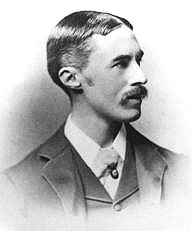
The poem
He stood, and heard the steeple Sprinkle the quarters on the morning town. One, two, three, four, to market-place and people It tossed them down.
Strapped, noosed, nighing his hour, He stood and counted them and cursed his luck; And then the clock collected in the tower Its strength, and struck.
when i read this poem i got goosebumps! I love it! the imagery is amazing...
I read this poem for school and I am totally confused!
I am just getting back to poetry and I'm having a little difficulty interpreting the poem "Eight O'Clock" -Am I correct in assuming the subject "He" is referring to humanity in general? Or am I taking it too far.Please post your comments
i read this poem , but i couldnt understand it
i need someone to analyse it or to give a paraphrase for it and i'll be thankfull
thank u
Analysis
Literally, this poem is about a man being hung by the steepl in an old english town and hes counting the minutes he has left until eight o clock which is when he dies. On a deeper level, this poem acknowledges the fact that time controls us and is the death of us, seing how it was the clock chime that decided his time of death.
Comment on Housman "Eight O'Clock"
This poem not only links the inevitable control time has on all of us, but ends in a beautiful but macabre piece of imagery that has haunted me since I read in in the early 1980's. The ancient Greeks used two measures of time: chronos and kairos (to use English characters). Chronos is that time which is common to all. 8:00 is 8:00, 45 seconds is 45 seconds, etc. Kairos is more of the "season" type of time. "It's…
Read the whole commentThis poem not only links the inevitable control time has on all of us, but ends in a beautiful but macabre piece of imagery that has haunted me since I read in in the early 1980's.
The ancient Greeks used two measures of time: chronos and kairos (to use English characters). Chronos is that time which is common to all. 8:00 is 8:00, 45 seconds is 45 seconds, etc. Kairos is more of the "season" type of time. "It's time I fix that old car," or "it is now time for him to die."
Eight O'Clock mixes chronos and kairos very deftly, perhaps unintentionally.
But the intentionally macabre imagery is of the rope seemingly connected to the clock tower minute hand. One can picture the rope tightening as the minute hand rises to the full noon position, killing the prisoner.
I don't believe the gallows were indeed connected to the tower any more than the hangman listenting to the bells or getting a signal from the warden. But the image remains of a link.
For a few lines, a very well written poem by Housman! It is similar of IX in "Shropshire Lad" except that is more melancholy about the injustice of hanging the poor man waiting to die. He also will see 8:00, but not 9:00, but the macabre imagery of the linking of time of day to time to die is not present in that poem.
eight o'clock
this poem is very simple and we don't know in what sense the poet wrote this...............but everyone gives his own interpretation which i think is very hard to understand...
shit
this poem sucks
Interpretation
Can anyone interpret this poem?
8 oclock
Though, I am still in confusion, but we should interprete this poem as the guideline to use the time properly even seconds. i dont know, what the rest people are saying about it but I think, this poem urges us to use the time for better world to live in.