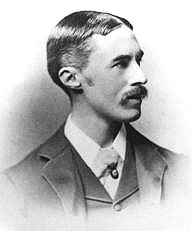
The poem
The time you won your town the race We chaired you through the market-place; Man and boy stood cheering by, And home we brought you shoulder-high.
To-day, the road all runners come, Shoulder-high we bring you home, And set you at your threshold down, Townsman of a stiller town.
Smart lad, to slip betimes away From fields where glory does not stay And early though the laurel grows It withers quicker than the rose.
Eyes the shady night has shut Cannot see the record cut, And silence sounds no worse than cheers After earth has stopped the ears:
Now you will not swell the rout Of lads that wore their honours out, Runners whom renown outran And the name died before the man.
So set, before its echoes fade, The fleet foot on the sill of shade, And hold to the low lintel up The still-defended challenge-cup.
And round that early-laurelled head Will flock to gaze the strengthless dead, And find unwithered on its curls The garland briefer than a girl's.
This poem is true in so many ways. Its strange to think that the boy will be remembered more because he died young.
The poem brings tears to my eyes more than twenty years after the death of my talented fifteen-year-old son. Like the boy in Housman's poem, he did not wear his honours out.
I'm impressed by the repeated motif of "shoulder-high." The poem is not corny. You have to interpret it in the light of language over a century ago.
I think that this is a good poem also, when i read it for the first time i also agreed with the view that this poem was about a great athlete that physically died young. but as i read it more over i realized that there are hidden clues in this poem that could hint towards the idea that this poem is about a young athlete who accomplished something but after time his name died because it was "old news" and possibly other athletes broke his record. i think that this poem could give the idea of "15 minutes of fame". especially with the line "and the name died before the man".
this poem is very very very splendiferious. it makes my mouth water for...water. I think this may be the answer to life as it is. AE Housman is a god...in my pants.
I agree with Amachmid that is so true lets chat buddy!!!
I am writing a critic paper for english on this poem and I don't like it. Housman's idea in this poem is that it is good for an athlete to die young because then he won't have to feel the pain of being forgotten. Who would ever say that early death was good?
This is one of only two poems that I remember from high school. It's concept has come back to me many times. twenty years later I finally took the time to look it up. It rings true.
A.E. Housman presents the merits of passing away in one’s prime in “To an Athlete Dying Young.” When one reads the first stanza, it is noticed that an athlete has won a race “And home we brought you shoulder-high” (line 4). In the second stanza, he is also brought home shoulder-high, but instead of it being a victory, it is a funeral procession. The speaker then seems to praise the young athlete who has died by…
Read the whole commentA.E. Housman presents the merits of passing away in one’s prime in “To an Athlete Dying Young.” When one reads the first stanza, it is noticed that an athlete has won a race “And home we brought you shoulder-high” (line 4). In the second stanza, he is also brought home shoulder-high, but instead of it being a victory, it is a funeral procession. The speaker then seems to praise the young athlete who has died by stating, “Now you will not swell the rout/Of lads that wore their honors out” (lines17-18). The young athlete will be remembered as a winner since he died at his peak, instead of dying old and being forgotten. Housman’s use of a simple rhyme scheme of aabb… sets the simplicity of the poem. The poem also happens to be an apostrophe, because a dead person is addressed as if the person were alive
I really don't believe that Housman was implying the notion of "15 minutes of fame". It said that..."Now you will not swell the rout Of lads that wore their honours out, Runners whom renown outran And the name died befor the man." Housman is saying that the young athlete who died will not have his name die before the man, and they will not go in the same direction that the others (who wore their honours out) did. I really think that Housman was trying to say that the name will still go on...
as the great bambino said...
"heroes get remembered, but legends never die"
-The Sandlot
To An Athlete Dying Young
In honor of Paul N. Hug, a great athlete and poet, who died young in 2011, by his many friends.