There are a lot of questions on this poem considering it is only 2 lines long. First it needs to be understood that it is a short, witty, satirical poem. The first question would be who is the poem addressed to? Dog is a derogatory term for slave or underling but the 'sir' suggests someone higher...but in that case the narrotor is making an offensive point about either a member of the kings court or the king…
Read the whole comment
There are a lot of questions on this poem considering it is only 2 lines long. First it needs to be understood that it is a short, witty, satirical poem. The first question would be who is the poem addressed to? Dog is a derogatory term for slave or underling but the 'sir' suggests someone higher...but in that case the narrotor is making an offensive point about either a member of the kings court or the king himself. Dog is also back slang for God and so possibly he is suggesting that the king is setting himself up as God. Pope seems to be suggesting that someone is acting as a 'lapdog'.
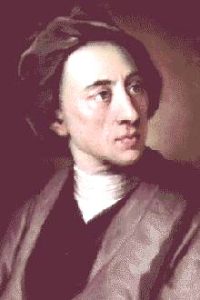
Also to be noted is the context in which it was written, Alexander Pope had an axe to grind at the kings court as he wanted to be on the inner circle and wasn't. Therefore it is not unlikely that this is derogatory about the king and his court.
Another question would be; is the narrator giving the collar to the king for use himself, for use on a dog, or for use on a slave. The formal address of 'Pray tell me, sir' suggests that he wanted to be offensive without being to obvious that he was being offensive.
There is a wonderful "sequel" to this dog's collar, which I have never heard discussed. A few yers later, a rival of Alexander Pope's (Colley Cibber) became poet laureate of England (despite what one might wonder about King George's appreciatiation for English poetry). "Pope Alexander" ridiculed this rival publicly, by equating his position as Poet Laureate to service as "the King's Fool:" "In merry old England it…
Read the whole comment
There is a wonderful "sequel" to this dog's collar, which I have never heard discussed. A few yers later, a rival of Alexander Pope's (Colley Cibber) became poet laureate of England (despite what one might wonder about King George's appreciatiation for English poetry). "Pope Alexander" ridiculed this rival publicly, by equating his position as Poet Laureate to service as "the King's Fool:"
"In merry old England it once was a rule, The King had his Poet, and also his Fool: But now we're so frugal, I'd have you to know it, That Cibber can serve both for Fool and for Poet."
To which Cibber replied "Well Sir, if I am the King's fool sir, who's fool are you?"
I have to believe that Cibber must have come across the dog's collar, or some story of it, and used it against its author.
There are a lot of questions on this poem considering it is only 2 lines long. First it needs to be understood that it is a short, witty, satirical poem. The first question would be who is the poem addressed to? Dog is a derogatory term for slave or underling but the 'sir' suggests someone higher...but in that case the narrotor is making an offensive point about either a member of the kings court or the king…
Read the whole commentThere are a lot of questions on this poem considering it is only 2 lines long. First it needs to be understood that it is a short, witty, satirical poem.
The first question would be who is the poem addressed to? Dog is a derogatory term for slave or underling but the 'sir' suggests someone higher...but in that case the narrotor is making an offensive point about either a member of the kings court or the king himself.
Dog is also back slang for God and so possibly he is suggesting that the king is setting himself up as God.
Pope seems to be suggesting that someone is acting as a 'lapdog'.
Also to be noted is the context in which it was written, Alexander Pope had an axe to grind at the kings court as he wanted to be on the inner circle and wasn't. Therefore it is not unlikely that this is derogatory about the king and his court.
Another question would be; is the narrator giving the collar to the king for use himself, for use on a dog, or for use on a slave. The formal address of 'Pray tell me, sir' suggests that he wanted to be offensive without being to obvious that he was being offensive.
There is a wonderful "sequel" to this dog's collar, which I have never heard discussed. A few yers later, a rival of Alexander Pope's (Colley Cibber) became poet laureate of England (despite what one might wonder about King George's appreciatiation for English poetry). "Pope Alexander" ridiculed this rival publicly, by equating his position as Poet Laureate to service as "the King's Fool:" "In merry old England it…
Read the whole commentThere is a wonderful "sequel" to this dog's collar, which I have never heard discussed. A few yers later, a rival of Alexander Pope's (Colley Cibber) became poet laureate of England (despite what one might wonder about King George's appreciatiation for English poetry). "Pope Alexander" ridiculed this rival publicly, by equating his position as Poet Laureate to service as "the King's Fool:"
"In merry old England it once was a rule,
The King had his Poet, and also his Fool:
But now we're so frugal, I'd have you to know it,
That Cibber can serve both for Fool and for Poet."
To which Cibber replied "Well Sir, if I am the King's fool sir, who's fool are you?"
I have to believe that Cibber must have come across the dog's collar, or some story of it, and used it against its author.