The poem
What are we waiting for, assembled in the forum?
The barbarians are due here today.
Why isn't anything happening in the senate? Why do the senators sit there without legislating?
Because the barbarians are coming today. What laws can the senators make now? Once the barbarians are here, they'll do the legislating.
Why did our emperor get up so early, and why is he sitting at the city's main gate on his throne, in state, wearing the crown?
Because the barbarians are coming today and the emperor is waiting to receive their leader. He has even prepared a scroll to give him, replete with titles, with imposing names.
Why have our two consuls and praetors come out today wearing their embroidered, their scarlet togas? Why have they put on bracelets with so many amethysts, and rings sparkling with magnificent emeralds? Why are they carrying elegant canes beautifully worked in silver and gold?
Because the barbarians are coming today and things like that dazzle the barbarians.
Why don't our distinguished orators come forward as usual to make their speeches, say what they have to say?
Because the barbarians are coming today and they're bored by rhetoric and public speaking.
Why this sudden restlessness, this confusion? (How serious people's faces have become.) Why are the streets and squares emptying so rapidly, everyone going home so lost in thought?
Because night has fallen and the barbarians have not come. And some who have just returned from the border say there are no barbarians any longer.
And now, what's going to happen to us without barbarians? They were, those people, a kind of solution.
One of the best works by the "poet of the city" (Lawrence Durrell). Haunting and prophetic. And, despite when it was written, a metaphor for our (modern) times. How often have political leaders cautioned about the need to be prepared to meet a threat, articulated but so often not specified. The threat draws the people together, whatever they think of the leadership. Without the threat, what will the people do. And what will happen to the leadership?
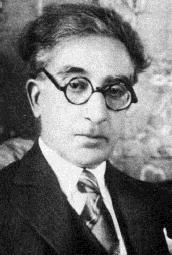
I would have to disagree with the analysis of Mr Hodge. Cavafy had no intention to criticise the leaders or the leadership of his time. The meaning of the poem can be better understood if one takes into account the time that was written (in January 1899, just six months after the poem Monotony). The major question is here again the same insufferable boredom that always hunted the poet (he was after all a civil…
Read the whole commentI would have to disagree with the analysis of Mr Hodge. Cavafy had no intention to criticise the leaders or the leadership of his time. The meaning of the poem can be better understood if one takes into account the time that was written (in January 1899, just six months after the poem Monotony). The major question is here again the same insufferable boredom that always hunted the poet (he was after all a civil servant in the same office for 33 years!). The Romans depict the kind of people that after a triumphal course of centuries, reaching the peak of their power, civilisation and knowledge, suffer from the same old routine of repeating the same life, a life without anything new or exciting. And it is this kind of people that are drawn towards anything extreme that could bring a change in their lives, provide some spice and kill this intolerable boredom. This extreme in the poem is of course the barbarians, those who reaching Rome, will bring a violent and sudden change. They will simplify the lives of the Romans, and for this change the Romans are happy to fully relinquish their national pride and their sense of selfcontrol. This poem is certainly one of the most symbolic of all the poems written in the Greek language ever, and certainly one of the finest of Cavafy.
I have been trying to conclude who the barbarians could be in this poem. The could be the Goths, the Gauls, the Celts,the Romans or maybe even Alexander the Great's army from the point of view of the provinces that he conquered. I would greatly appreciate your feedback.
Thanking you in advance,
Aliénor L-C
Dear Alienor,
The barbarians is always the OTHER, in contrast to whom we form our identity
I personnally think tha t the barbarians here would signify the other as entity rather than the Romans, the Africans or what-so-ever. The other that we always need to identitfy ourselves. This is why perhaps that the barbarians do not arrive at the end of the poem. It is important noethe less to say that the political institutions and the ones who sustain them are dependent on the 'existence', at laest in the…
Read the whole commentI personnally think tha t the barbarians here would signify the other as entity rather than the Romans, the Africans or what-so-ever. The other that we always need to identitfy ourselves. This is why perhaps that the barbarians do not arrive at the end of the poem. It is important noethe less to say that the political institutions and the ones who sustain them are dependent on the 'existence', at laest in the imaginary of the community, of those others to establish their cohesion, authority and sense of being united. Because to be united is mainly to be againt someone else. So for me the barbarians is tha t entity that any society holds to be its opposite so that to set itself as 'one'. While i truth no society is one,but instead it is always and ever many, heterogene and diverse.
This was the late great Palestinian scholar, Edward Said's favorite poem. It was read by his daughter at his funeral.
United States
In 1992 Francis Fukuyama published "The End of History," a political treatise in which he argues that ideological revolutions will come to an end in the modern era. Before the end of the Cold War, there were always conflicts between seemingly plausible forms of government and rule (e.g communism, democracy, fascism), but after the Soviet Union fell, Fukuyama argues that Liberal Democracies became the only logical…
Read the whole commentIn 1992 Francis Fukuyama published "The End of History," a political treatise in which he argues that ideological revolutions will come to an end in the modern era. Before the end of the Cold War, there were always conflicts between seemingly plausible forms of government and rule (e.g communism, democracy, fascism), but after the Soviet Union fell, Fukuyama argues that Liberal Democracies became the only logical form of government left to the world. Over the next decades, Fukuyama predicted that liberal democracies would become the only form of government tenable in modern countries (much like Marx predicted that communism would eventually supplant all governments).
I mention this because it is the poem's political implications that most interest me. In the early to mid Roman Empire, there was always the recognizable conflict of ideologies between the Romans and their barbarian counterparts. Rome was the self-professed beacon of civilization and considered barbarians backwards peoples without manners or proper customs. Imagine Cold War America and Russia and their attitudes towards each other: the parallels of thought are inescapable.
Part of the reason that Rome became so great was that its glory consisted of constantly defining itself in contrast to its barbarian counterparts: the whole city of Rome, in the poem, only comes to life when they learn that the Barbarians are coming. Rome was paradoxically a civilization that was both xenophobic and inclusive (again, think America): they despised the customs of others, but were more than happy to allow ex-patriated foreign peoples to become Roman citizens.
As a result of these two conflicting views, the later Roman Empire began to have an identity crisis. Rome of the 4th century consisted of an extremely heterogenous people (Diocletian, for instance, was formerly a barbarian), but Romans still maintained a hostility towards outsiders. But who were these 'outsiders?' The Roman Empire covered much of Europe and with the inclusion of many former barbarians peoples into positions of power it became extremely difficult for the Romans to conceptualize their enemies. The world had become Roman; no conflicts existed to motivate the people who viewed everyone as the same and, as a result, the Empire ironically began to decline.
The major question of this poem is the following: how can a dominant regime keep its power without enemies?
I
the Barbarian are coming
I feel that no matter how bad a goverment is, charity begans at home and everyone would rally around together when they feel threaten by outsiders. I felt that in the Barbarians are coming, the people was ready to deal with whatever was coming their way and they put up an united front, the poem relates to the cold war, Russia and Chinia, (the East) against America and England (the west in) the end their relationship thraw.