The poem
I
I see the boys of summer in their ruin Lay the gold tithings barren, Setting no store by harvest, freeze the soils; There in their heat the winter floods Of frozen loves they fetch their girls, And drown the cargoed apples in their tides.
These boys of light are curdlers in their folly, Sour the boiling honey; The jacks of frost they finger in the hives; There in the sun the frigid threads Of doubt and dark they feed their nerves; The signal moon is zero in their voids.
I see the summer children in their mothers Split up the brawned womb's weathers, Divide the night and day with fairy thumbs; There in the deep with quartered shades Of sun and moon they paint their dams As sunlight paints the shelling of their heads.
I see that from these boys shall men of nothing Stature by seedy shifting, Or lame the air with leaping from its hearts; There from their hearts the dogdayed pulse Of love and light bursts in their throats. O see the pulse of summer in the ice.
II
But seasons must be challenged or they totter Into a chiming quarter Where, punctual as death, we ring the stars; There, in his night, the black-tongued bells The sleepy man of winter pulls, Nor blows back moon-and-midnight as she blows.
We are the dark derniers let us summon Death from a summer woman, A muscling life from lovers in their cramp From the fair dead who flush the sea The bright-eyed worm on Davy's lamp And from the planted womb the man of straw.
We summer boys in this four-winded spinning, Green of the seaweeds' iron Hold up the noisy sea and drop her birds, Pick the world's ball of wave and froth To choke the deserts with her tides, And comb the county gardens for a wreath.
In spring we cross our foreheads with the holly, Heigh ho the blood and berry, And nail the merry squires to the trees; Here love's damp muscle dries and dies Here break a kiss in no love's quarry, O see the poles of promise in the boys.
III
I see you boys of summer in your ruin. Man in his maggots barren. And boys are full and foreign to the pouch. I am the man your father was. We are the sons of flint and pitch. O see the poles are kissing as they cross.
I can not genralise the poem into one comment so I am going to talk about the first stanza.
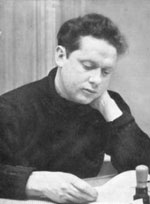
It was said that Dylan Thomas walked past a beach and saw some old men sunbathing. It disgusted Thomas and he said "I see the boys of summer in their ruin" which would explain the first stanza. It was said he wrote a short poem about this which was how I see The Boys Of Summer started.
Sarah, I'm perplexed by its density. I'll take another go at it with your insight and see what happens. Thanks
I read the "boys of summer" to be young men at the end of childhood and on the edge of adulthood. By no means am I an expert, but have observations and ideas. The speaker in part I is upset that the boys are not going to be children anymore. The speaker comments that the boys are not prepared for the change; they are willingly scared, doubtful; they are less emotional, colder in spirit, freezing over the hot, bright…
Read the whole commentI read the "boys of summer" to be young men at the end of childhood and on the edge of adulthood. By no means am I an expert, but have observations and ideas.
The speaker in part I is upset that the boys are not going to be children anymore. The speaker comments that the boys are not prepared for the change; they are willingly scared, doubtful; they are less emotional, colder in spirit, freezing over the hot, bright “pulse” of youth.
In part II, the speaker changes to first person, so the boys of summer are the speakers. The tone of part II is darker and louder, mentioning death multiple times, calling on death, causing death and destruction of nature. The phallic “pole” is a weapon, ironic and disturbing.
In part III, the speaker is no longer the boys; it might be a boy looking back This section is shorter, more quiet, and the boys seem to be dead, decomposing, burnt, ruined.