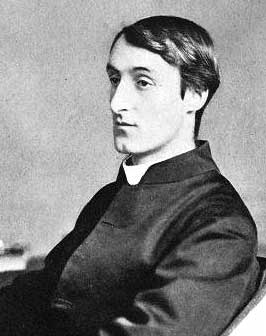
The poem
Mortal my mate, bearing my rock-a-heart Warm beat with cold beat company, shall I Earlier or you fail at our force, and lie The ruins of, rifled, once a world of art? The telling time our task is; time's some part, Not all, but we were framed to fail and die- One spell and well that one. There, ah thereby Is comfort's carol of all or woe's worst smart.
Field-flown, the departed day no morning brings Saying 'This was yours' with her, but new one, worse, And then that last and shortest...
As I see it, this poem is a reminder of the shortness of life, and a study in the tension between the physical and the spiritual. I interpret "my mate" in line one to refer to the body, which bears the poet's physical and spiritual heart. This is described as his "rock-a-heart" - a phrase which is clarified in the next line: "warm beat with cold beat company" - suggesting that the "spiritual heart" has a warm beat,…
Read the whole commentAs I see it, this poem is a reminder of the shortness of life, and a study in the tension between the physical and the spiritual. I interpret "my mate" in line one to refer to the body, which bears the poet's physical and spiritual heart. This is described as his "rock-a-heart" - a phrase which is clarified in the next line: "warm beat with cold beat company" - suggesting that the "spiritual heart" has a warm beat, but it must co-exist with the physical heart - the "rock" - with its cold beat. The question then asked is: which aspect of the poet's being will give up first - the physical or the spiritual? "...shall I earlier or you fail at our force, and lie The ruins of, rifled, once a world of art?" Will the poet's artistic work fail before he dies, because of some lack of inspiration, or will his physical demise force the end of the work?
"The telling time our task is" speaks about the need to use time wisely while we have it, and the following lines support this. However, there is a note of hope: "time's some part, not all" - this transitory life is not all there is. This is a comfort to those with faith in God, but "woe's worst smart" to those without faith.
The last three lines sum up the whole tenor of the poem. This life is short and all the achievements of this life end in death. It seems an extremely depressing poem, but it needs to be set against the deep faith of the poet in his conviction of the eternal purpose that lies behind the transitory nature of this world: "...time's some part, Not all, but we were framed to fail and die..." There is a purpose even in failure and death.