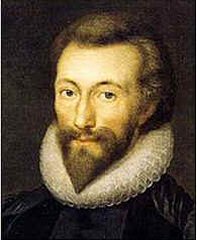
The poem
Show me, dear Christ, thy Spouse, so bright and clear. What! is it She, which on the other shore Goes richly painted? or which, robbed and tore, Laments and mourns in Germany and here? Sleeps she a thousand, then peeps up one year? Is she self-truth and errs? now new, now outwore? Doth she, and did she, and shall she evermore On one, on seven, or on no hill appear? Dwells she with us, or like adventuring knights First travail we to seek and then make love? Betray, kind husband, thy spouse to our sights, And let mine amorous soul court thy mild dove, Who is most true and pleasing to thee then When she's embraced and open to most men.
The Spouse is the Church. The sonnet is contrasting the Roman Catholic Church, which Donne had abandoned, and the Protestant Church(es) in an attempt to resolve the question of which is the true Church.
The first eight lines are clear enough in their description of the differences between Catholic and Protestant forms of Christianity. I am unable to understand the last six lines. How is one to interpret the distinction between seeking and making love? Does "she" in the last line refer to the soul or the Spouse? Grammatically it seems to refer to the soul, but the interpretation becomes difficult.