The poem
What is it to grow old? Is it to lose the glory of the form, The lustre of the eye? Is it for beauty to forego her wreath? Yes, but not for this alone.
Is it to feel our strength— Not our bloom only, but our strength—decay? Is it to feel each limb Grow stiffer, every function less exact, Each nerve more weakly strung?
Yes, this, and more! but not, Ah, 'tis not what in youth we dreamed 'twould be! 'Tis not to have our life Mellowed and softened as with sunset-glow, A golden day's decline!
'Tis not to see the world As from a height, with rapt prophetic eyes, And heart profoundly stirred; And weep, and feel the fulness of the past, The years that are no more!
It is to spend long days And not once feel that we were ever young. It is to add, immured In the hot prison of the present, month To month with weary pain.
It is to suffer this, And feel but half, and feebly, what we feel: Deep in our hidden heart Festers the dull remembrance of a change, But no emotion—none.
It is—last stage of all— When we are frozen up within, and quite The phantom of ourselves, To hear the world applaud the hollow ghost Which blamed the living man.
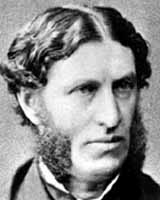
Growing Old This poem was written by Matthew Arnold. He was one of the greatest Victorian poets whose poems were of sad tone most of the time. This poem “Growing Old” was a deliberate challenge to “ Rabbi Ben Ezra” a poem by Browning with a positive attitude towards old hood. It starts with “Grow old with me, the best is yet to be” and the answer was “What is to grow old”. The title of this poem is “Growing Old “.…
Read the whole commentGrowing Old
This poem was written by Matthew Arnold. He was one of the greatest Victorian poets whose poems were of sad tone most of the time. This poem “Growing Old” was a deliberate challenge to “ Rabbi Ben Ezra” a poem by Browning with a positive attitude towards old hood. It starts with “Grow old with me, the best is yet to be” and the answer was “What is to grow old”.
The title of this poem is “Growing Old “. It gives as the impression that the poem will be of a positive attitude towards old hood. Using the word ‘growing ‘ means that old hood is wisdom, learning, growth and development. However, when we go through the poem, we find that it has a negative attitude and a sad tone.
This poem is of seven stanzas each contains five lines. The first stanza starts with “ What is to grow old?” a question asked by the poet to explore the possibilities of what old hood is. In order to answer this question the poet asks more questions. “Is it to lose the glory of the form ... The luster of the eye?” .the poet wants to say that when one is young his figure is straight and his eyes are shinning, but once he grows old, there are many physical changes that take place. The body becomes weak and bends down. The eyes lose there luster and sight. Then, the poet asks another question “Is it for beauty to forgo her wreath?” in this question there is an image. The beauty of youth is like a queen who is taking of her crown and loses her glory. The same thing happens when people grow old, they lose there beauty and glory. In the last line of this stanza comes the answer of these questions. It is “Yes , but not for this alone” the poet says yes when someone grows old, he loses his glory of the form and the luster of the eye and loses his beauty, not only this but even more. In this stanza, all the changes that the poet mentioned were physical changes and focusing on the outer landscape of the body.
In the second stanza, the poet asks more questions “Is it to feel our strength.. Not our bloom only, but our strength decay?” Here the poet is talking about the inner landscape and mentioning two kinds of strength: mental and physical strength. He gives an image that when we are young we are like blooming flower full of life and strength, but once we grow old this strength declines and fades away. To explain the physical weakness the poet says “Is it to feel each limb.. Grow stiffer, every function less exact”. Old people muscles grow weak and they cannot bent or move as they used to do when they were young. Their bodies become stiffer and weaker. Not only this, but they also suffer from mental weakness. “Each nerve more weakly strung?”the poet says that nerves are not connected as they used to be they are weakly strung, for old people forget a lot and do not remember things properly which can be a serious problem. These physical and mental weaknesses are vital changes in old people’s lives.
In the third stanza, the poet says ‘yes’ to all the questions he asked in stanza two. “Yes this and more! But not” what old hood for him is more than what he mentioned earlier,” ‘Ah, ‘tis not what in youth we dreamed ‘twould be!” When he was young he had a vision about old hood that it is the period of rest. Young people are always busy with responsibilities and problems. They are full of passion. He thought that when he grows old, he will be free from all of these and that his heart will not be disturbed. He thought that his life will decline as soft and mellow as a sunset glow. However,”tis not what in youth we dreamed ‘twould be!”. Old hood is not as soft as a sunset glow. It is not a golden day’s decline. His heart is still willing, but the body is weak, and this state is very disturbing.
In the forth stanza, the poet adds that “‘Tis not to see the worlds...As from a height, with rapt prophetic eyes”. He wants to say that old hood is not what he thought it would be. He thought that when he grows old, he will be at the top of the mountain of life because life is a vertical journey. He thought that he will have a full view of life, that he will be wise and detached from worldly things and satisfied with what he has done in life. Instead, what happened was shocking for him and nothing of this happened. He cannot be moved by what he see in life, instead he is weeping over the old days, the days that are no more. This shows clearly his negative attitude towards old hood.
In the fifth stanza, he adds that old hood “is to spend long days.. And not once feel that we were ever young”. He says that time moves very slowly unlike the spring days of life when time used to pass very quickly. Old hood for him is to be immured and imprisoned in a hot prison. His young soul is imprisoned in his old body, and every month moves with tiring pain.
In the sixth stanza, he says “It is to suffer this,… And feel but half, and feebly, what we feel”. He says that beside the slow of time, there is some lack of feeling. He his young heart cannot feel a joy in anything because of his weak body. And all the sweet days of youth are painful memories now. The only things that he remembers are the changes that take place as he continues to grow old. They are dull memories and full of sorrows. That is why he can not have any warm feelings or memories of his youth.
In the last stanza, the poet gives a beautiful image that life is a play. Earth is its stage and people are the actors. He says that the last stage of all is when people grow old and become cold and frozen from within with no warm feelings. They become just like ghosts that can disappear at any time. Just then people remember to appreciate this old person when it is no time to enjoy any appreciation.
Poetry-B
Thanks alot!!!
This analysis had really helped me today.... to solve my Poetry-B Paper...
arnold was pessimistic poet