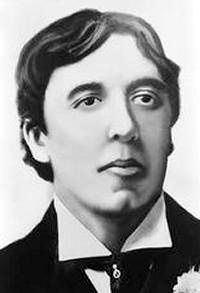
The poem
SYMPHONY IN YELLOW
An omnibus across the bridge Crawls like a yellow butterfly And, here and there, a passer-by Shows like a little restless midge.
Big barges full of yellow hay Are moored against the shadowy wharf, And, like a yellow silken scarf, The thick fog hangs along the quay.
The yellow leaves begin to fade And flutter from the Temple elms, And at my feet the pale green Thames Lies like a rod of rippled jade.
yellow reprisents the hope that has been lost by the people in the war. this poem is about it trying to find someone to give hope to.
i love this poem. i've no idea what its about, i thought it was about London. when was the war??? what was that other comment about. im doing about this for coursework, its well hard i dont know what im talkin about.
Could anyone tell me, what this poem is actually about? I can't see the connection to the "trying to find someone to give hope to" and the poem. How can we tell that it is about that? couldn't yellow also stand for sickness or illness? like in dreams... please help!!!!! :(
EZRA POUND'S STUDY OF THE CHINESE WRITTEN CHARACTER AS A MEDIUM FOR POETRY, LED HIM TO FOUND THE IMAGIST SCHOOL OF POETRY EARLY IN HIS CAREER, IN LONDON...CHINESE IDEOGRAMS ARE VISUAL METAPHORS: THEY CAST IMAGES (PICTORIAL) ON THE MIND...THIS IS CALLED PHANOPOIA...THIS IMAGIST POEM BY WILDE PRECEDED POUND'S IMAGIST SCHOOL...ENJOY IT AS IF IT WERE AN IMPRESSIONIST PAINTING (THE FRENCH IMPRESSIONISTS WERE IN BUSINESS…
Read the whole commentEZRA POUND'S STUDY OF THE CHINESE WRITTEN CHARACTER
AS A MEDIUM FOR POETRY, LED HIM TO FOUND THE IMAGIST
SCHOOL OF POETRY EARLY IN HIS CAREER, IN LONDON...CHINESE IDEOGRAMS ARE VISUAL METAPHORS: THEY CAST IMAGES (PICTORIAL) ON THE MIND...THIS IS CALLED PHANOPOIA...THIS IMAGIST POEM BY WILDE PRECEDED POUND'S IMAGIST SCHOOL...ENJOY IT AS IF IT WERE AN IMPRESSIONIST PAINTING (THE FRENCH IMPRESSIONISTS WERE IN BUSINESS ACROSS THE CHANNEL AT THE TIME...IT HAS NOTHING TO DO WITH WWI. (EN PASSANT: ONE OF OSCAR'S 2 SONS, CYRIL, WAS KILLED IN WWI.)... THE COLOR YELLOW NO MORE STANDS "FOR" ANYTHING THAN THE COLOR YELLOW IN AN IMPRESSIONIST PAINTING. (IF IT DID IT WOULD BE A SYMBOLIST POEM!)...PAY ATTENTION TO THE DETAILS: THE OMNIBUS IS COMPARED TO A BUTTERFLY, ERGO,
"RUSH HOUR" IN LONDON...ONE KIBITZER ASKS WHAT IT IS ABOUT?--IT AN EXQUISITE VERBAL PAINTING, THAT'S WHAT IT IS "ABOUT."
The color yellow was associated with the aesthetic movement, which, I'm sure you know, Wilde was thoroughly involved in. As well, the title evokes a series of paintings by Whistler, each a "symphony" in a certain color. This mixing of the arts in titles of pieces was in vogue with the Aesthetes.
i love this poem, my guess is that the symphony in yellow i the celebration of when the spring comes. the first line "an omnibu across the bridge crawls like a yellow butterfly" i think this could be the transporting of newly cut straw cuz of the yellow thing. this poem swallows me up and makes me think about how we dont celebate spring anymore even when its the prettiest time.
Amy(from the UK) or whover she is, is completely wrong. Symphony in Yellow is not about the "war" which she claims it is about. You cannot make this claim with sufficient evidence from the poem (quotes).
The poem is about how Wilde appreciates the town describing everything including the smog as beautiful (smog is described as a "silken scarf").
The poem goes on to describe people as irrelevent and small in comparison as they are described as "midges".
Oh yeah, amy from the UK you're wrong.
First of all, you can't go around telling people that their interpretations of this poem are right or wrong because that type of thing is completely subjective. Each person reads poetry in their own way and no one has the right to decide on whether the interpretations are "right" or "wrong" but one can certainly disagree =]
Secondly, I see this poem as the description of when fall ends (The yellow leaves begin to fade) and spring begins (And at my feet the pale green Thames\Lies like a rod of rippled jade). I find it ironic that Wilde makes it sound so beautiful because spring in London is so rainy and icky!
i see the same thing , this poem is about spring .
the poetry tries to show us the beauty of london despite the rainy wether even in spring. symphony in yellow shows the end of autumn and the begining of spring.
Analysis of Oscar Wilde's Symphony In Yellow
Sorry, but everything that has been written about what this poem means is totally wrong. Here is my interpretation, never published before. Should I send it to a literary journal? I have discovered something unknown about Oscar Wilde ever before I think! I love his writing, his wit, his deep soulful feel of being human. I admire all his works. He was one of the greats of all time. Well, here goes... see what you…
Read the whole commentSorry, but everything that has been written about what this poem means is totally wrong. Here is my interpretation, never published before. Should I send it to a literary journal? I have discovered something unknown about Oscar Wilde ever before I think! I love his writing, his wit, his deep soulful feel of being human. I admire all his works. He was one of the greats of all time. Well, here goes... see what you think, ok? This is about 700 words long.
========================================
On Oscar Wilde's 'Symphony In Yellow', an analysis by Declan M. Nolan
This poem was published in 1881, when Oscar Wilde was aged twenty-six. I believe that Oscar Wilde had a premonition of the ultimate calamity that was to befall him beginning fourteen years later, when he was arrested for his homosexual activities, should he continue to pursue his wanton, bohemian life of unorthodoxy in this stiff-upper-class-lipped society of Victorian England. In fact, in the tradition of his revered and unorthodox mother, as she held her famous weekly poetry recital audiences in her Dublin parlour while all the while, spellbound, Oscar the young boy listened but dared not speak, Oscar Wilde was nurtured on the sweet nectar of her rebellious and outrageous locutions. She embellished the truth. Facts were secondary to a good story. Oscar learned well by this. Thus, his imagination roams into the future in this poem.
Although Norton’s editor suggests the poem is simply about the colour yellow in the climate and seasons of London, I maintain that the poem is not about London’s climate or the seasons at all. It is about Oscar Wilde’s life as it would near its end; and how he saw it in the shadow of possibilities. At the moment of writing, he was imagining the possibility of being put on trial for breaking English laws on homosexuality, for he was surely aware that this practice he was currently engaged in was against all the social and legal mores of his time and carried heavy legal and social penalties. Such a trial actually occurred fourteen years after the poem was written. It devastated his relationship with his wife, with his public and especially with the one most endeared of his many homosexual lovers.
The imagery and symbolism of the one word “yellow” is painted as a brushstroke that permeates the canvas of the poem throughout, evoking Oscar Wilde’s sad contemplation at this moment of an inviting alternative to facing humiliation as a social outcast and felon. That alternative, in the poem, as I illustrate below, is elucidated as suicide in the glistening, green Thames River. The imagery and metaphoric symbolism of yellow and green and their juxtaposition in the poem are critical for understanding the true nature of the subject of this poem. Thus, I maintain that the Norton editor has missed the point of this poem entirely in seeking to attribute its nature to the obvious. Oscar Wilde did not write for the sake of being obvious. He was a great and prescient poet who wrote deeply from within in ways that have for over a century perplexed many who wished to understand his psyche and his writings.
//“At my feet the pale green Thames // Lies like a rod of rippled jade (lines 11, 12)”, says Wilde, the speaker, to himself. What type of “rod” is this? Why, it’s a lightening rod for resolving life’s plethora of disappointments. Wilde would like the reader to contrast the fascination in a rod of bright green jade, as the river is compared in metaphor, with the fascination of contemplating an alternative to everything around the poet that is familiar, everything in yellow that he sees around him, everything and everyone that constituted his life and who he has either betrayed or disappointed, a yellow that is no longer viable, that is painful to endure. The jade of the Thames is stark in contrast. Wilde uses simile to emphasize this most important metaphorical symbol for his life, the word “yellow”. The omnibus is featured in simile to a “yellow butterfly (line 2)”, contrasting with a miserable human life like his in the imagery of a restless “midge” (a very tiny, mosquito-like insect). Miserable he must have been this moment to compare himself to an insect, which he must have known but resists acknowledging, has more value than an inanimate yellow minibus, in that at least the insect is life.
The mood of the poem sinks deeper into depression as it dwells upon the situation of the moment, a situation that is coloured in the yellow of depression. // “The thick fog hangs along the quay (line 8)” // but it hangs as a heavy yellow scarf around the neck, pulling the human spirit down, down, like a deadweight upon the mind’s musings. In Line 10, Wilde finally gives us a hint of what the poem’s subject is really about. // “The yellow leaves begin to fade // And flutter from the Temple elms”. Here, the temple refers to the law courts of the Temple area of London, the courts which were to be the instrument which would bring this ruin to his life, with their edicts, the “yellow leaves” of line 9, fading his life into meaningless nothingness. His poem is his premonition of what eventually awaited him fourteen years later. Ultimately, after weighing the words of his own poem, being a man who loved life and the living of it to the full, he decided to live and to tempt fate. That is certainly, indeed, all we would expect of Oscar Wilde!
Depessed
Well this is incredibly depressing... you seem to have missed out some key features to better suit your grim interpretation of this poem, such as the "silken" scarf, which the fog is likened to. By mis-quoting, you have twisted the words to suit your own view. Of course this poem is open to interpretation and everyone has their own opinion, but if you quote at all, you should quote correctly.
Peace.
Deep
very deep poem that I was forced to read in English, still a decent poem