The poem
ANCIEN REGIME
I
Now that I, tying thy glass mask tightly, May gaze through these faint smokes curling whitely, As thou pliest thy trade in this devil's-smithy— Which is the poison to poison her, prithee?
II
He is with her; and they know that I know Where they are, what they do: they believe my tears flow While they laugh, laugh at me, at me fled to the drear Empty church, to pray God in, for them!—I am here.
III
Grind away, moisten and mash up thy paste, Pound at thy powder,—I am not in haste! Better sit thus, and observe thy strange things, Than go where men wait me and dance at the King's.
IV
That in the mortar—you call it a gum? Ah, the brave tree whence such gold oozings come! And yonder soft phial, the exquisite blue, Sure to taste sweetly,—is that poison too?
V
Had I but all of them, thee and thy treasures, What a wild crowd of invisible pleasures! To carry pure death in an earring, a casket, A signet, a fan-mount, a filigree-basket!
VI
Soon, at the King's, a mere lozenge to give, And Pauline should have just thirty minutes to live! But to light a pastille, and Elise, with her head, And her breast, and her arms, and her hands, should drop dead!
VII
Quick—is it finished? The colour's too grim! Why not soft like the phial's, enticing and dim? Let it brighten her drink, let her turn it and stir, And try it and taste, ere she fix and prefer!
VIII
What a drop! She's not little, no minion like me— That's why she ensnared him: this never will free The soul from those strong, great eyes,—say, "No!" To that pulse's magnificent come-and-go.
IX
For only last night, as they whispered, I brought My own eyes to bear on her so, that I thought Could I keep them one-half minute fixed, she would fall, Shrivelled; she fell not; yet this does it all!
X
Not that I bid you spare her the pain! Let death be felt and the proof remain; Brand, burn up, bite into its grace— He is sure to remember her dying face!
XI
Is it done? Take my mask off! Nay, be not morose, It kills her, and this prevents seeing it close: The delicate droplet, my whole fortune's fee— If it hurts her, beside, can it ever hurt me?
XII
Now, take all my jewels, gorge gold to your fill, You may kiss me, old man, on my mouth if you will! But brush this dust off me, lest horror it brings Ere I know it—next moment I dance at the King's!
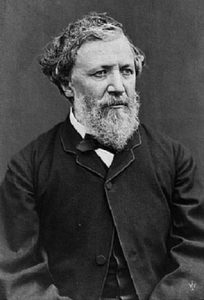
Its really good and meaningfull and Robert Browning is such a hunk. He has beautiful eyes.
this poem is very interesting as well as complicated and tells a story of how he thinks people can sometimes feel
Browning was obviousley an irratic soul with most of his mind dedicated to poetry and the hatred of love ,well browning if you were here today,id say, tell are freind jim of sheer beauty u captivate so nicly in ur poem.ROCK ON BOO YAHR!!!
This can show how people somtimes feel the feeling i get from this poem i s PARANOIA(or mabey that is just me)
i think that this is uber cool
hm..o.k
wen i first read this poem i fort it was kinda suckish but acctually it ROX!! it shows deep emotion and jelousy! Rock dude Browning!!!
Just had to write a monster essay on this beast of a peom, ure comments reeli helped, cheers!
this is a poem about jealousy hate and betrail i like this poem because it is evil dark and nasty
The Woman who is buying the poison must be really desperate to go as far as to kill the other woman, what could have driven her to do this?
I have been researching this poem for an essay at school. It is a monologue on a woman who is trying to get revenge on her husbands lover, as she isn't keen on the idea he has someone else. Her husband is an aristocrat and it shows they don't behave well and get away with anything. Towards the middle she speeds up and gets more angry sayin all the bad things about her lover as if she envies her
hya! we love u browning! poem of the day on may 10th 2003 wow a whole 5 days before my bday! we did a speach on this poem n ur comets helped! ta very much xx
The poem “the laboratory is written by Robert Browning”. Robert Browning was born in Camberwell, south London, as the son of Robert Browning, a wealthy clerk in the Bank of England. Browning received scant formal education. However, his father encouraged him to read and he had access to a large library, which founded a passionate love with poetry. The laboratory consists of 12 stanzas and has 4 lines to each stanza.…
Read the whole commentThe poem “the laboratory is written by Robert Browning”. Robert Browning was born in Camberwell, south London, as the son of Robert Browning, a wealthy clerk in the Bank of England. Browning received scant formal education. However, his father encouraged him to read and he had access to a large library, which founded a passionate love with poetry. The laboratory consists of 12 stanzas and has 4 lines to each stanza.
Creating an image of the lab the right from the opening 2 lines the poet gets us hooked. We can almost picture ourselves there, as the speaker refers to what they are doing as devils work but it does not stop her, it entices her. She only refers to the other couple as 'he' and 'she' as they remain nameless, as they have done something that does not warrant being given a name. There are frequent references to gold and jewels in the poem compared to the grimness of the lab. Is the poet trying to tell us that money is the root of all evil? The poet in the poem seems almost too polite e.g. asking questions in contrast to the nature in which she asks them. The poet has created a situation, which we care not for the intended victim because they deserve some punishment even though this is too excessive. The title may suggest that the poems setting will be situated in a laboratory however this is not the case as the poems storyline enrols in the tale of bereavement and murder, at a ball hosted by the “king” where the poison will be administrated. The main character is planning on poisoning her rival and can be considered less attractive than her as she describes her as a “minion”. This shows us that the woman in question may have psychological or emotional weakness, which may be the reason why she cannot keep a man. There are hints of paranoia thought the poem such as the quote “While they laugh, laugh at me” which shows us, the speaker, believes the new couple to be laughing at her misfortune.
Stanza one opens with the speaker putting on a mask to protect her eyes from the potion that the old mad is brewing. The old man is creating a deadly cocktail, to kill the speakers love rival. As the speaker is wearing a mask we are reminded of a medical procedure as she observes the formulating of the poison, as a doctor would pensively watch over an operation. “Which is the poison to poison her prithee” this quote tells us that the speaker wants a complex knowledge of the poison and it also shows us that she is showing curiosity to which poison is being selected to commit the murder. The repetition of the letter “P” provides a plosive tone and creates a sense of importance. She is in desperation to murder her rival to inflict her revenge on her philandering partner.
Stanza two reveals the speaker feels jealous “He is with her; and they know that I know
where they are” from this quote we learn that the speaker once again reveals her paranoia and jealousy as she is thinking about the couple being together, this also suggests that her partner has cheated on her. “While they laugh, laugh at me” this quote also informs us that the speaker is becoming upset as her rival is spending time with her love. We can also detect a suspicious tone in her voice; this shows she is emotionally distraught. The repetition of the word “laugh” shows the writers enthusiasm towards the reader’s perception of the speaker.
In stanza three Browning uses a range of imperative verbs to describe how the poison is made such as “grind” and “mash”, this choice of language suggest that the speaker is in an appalling state of mind. Her language is violent and angry; however it also reveals a hint of determination and control to the reader. The quote “I am not in haste” implies that the speaker is in no hurry; in fact she is enjoying watching the development of the deadly concoction being brewed in front of her wicked eyes. She enjoys the authority and power of being able to watch the progression of her poison. “Better sit thus, and observe thy strange things”. From this quote we can learn that the speaker is finding more pleasure watching the old man at work than being at the Royal Court where she is adored and treated like a divine individual, by a host of men who find her attractive and interesting which is contradictory to the fact that her ex lover despised every fact about her living body and personality. “Than go where men wait me and dance at the King's”.
Stanza four enrols in the idea of creating death. This factor enthrals the speaker and she shows her interest. She asks many questions “is that poison too?” this tells us that she wants to gain knowledge about the poison and wants to be involved in its creation. She also uses rhetorical questions “Sure to taste sweetly” which catches the reader’s imagination and gives them a feeling of evolvement. The speaker is in addition and awe of the deadly colours “The exquisite blue” and “Such gold oozings come!” these quotes inform us that she is relating the deadly fermentation to beautiful, harmless colours which shows that she is truly mad. “That in the mortar - you call it a gum?”
The fifth stanza enrols in telling us how the speaker is going to carry the poison. The quote “To carry pure death in an earring, a casket” tells us that she is planning to store the deadly concoction in an earring or casket. This storage space is highly unusual and unsuspecting for her victim. The speaker then becomes enthralled with places to hide the poison “A signet, a fan-mount, a filigree-basket!” Now the speaker comes up with a host of ideas, on where to store the poison, and becomes fascinated on the idea.
Speaking with a different purpose, the speaker starts stanza 6six with a specific intention of killing one person, her rival. However as the poem progresses she indulges in a variety of fantasies where she imagines murdering many other people. The reason for this is that the power of death has gone to her head. She now has the power to take any ones life when ever she wants and does not think of the consequences. “And Pauline should have just thirty minutes to live!
But to light a pastille, and Elise” this quote proves that her she firstly planed to kill her rival but now her twisted mind is set upon killing for fun. Pauline is another random victim selected for her good looks as the speaker is jealous. Now realises she could kill any one, the speaker sets herself another random target, Elsie as well. The quote “a mere lozenge to give” informs us of her ruthlessness and weird association of death with lozenges.
In stanza seven we can sense the speaker’s anticipation and excitement as she indulges in the fantasy of killing any one who she sees fit. From this we get a preconception that the speaker must be evil. The speaker’s dialogue is at an almost breathless tone and the pace of the poems quickens as she becomes caught up in the fantasy. “Quick is it finished?” this tells us that her anticipation has reached bursting proportions and she can’t wait to release it on her victim. This also tells us that the speaker is enthralled to se it’s nearly finished. The speaker now truly sees her power as the poison enters its final stages but is disappointed at the colour, “the colour’s to grim” as it is not as attractive as she would have hoped. This is contradictory as she wants an attractive poison for her attractive rival, who she despises greatly. “Why not soft like the phial's” this quote is also contradictory as phial is a healing product and not used for killing people with. “Let it brighten her drink” this quote can be interpreted as the speaker wanting to be caught, and she wants her victim to realise there is something wrong with her drink.
Stanza eight reveals a mood change and informs us of an unbalanced, unstable speaker. For the first time she is now concerned that the potion will not kill her rival. “What a drop”, and the speakers mood changes. The speaker believes that her rival “ensnares” men, which shows her to be superior to the speaker. We also realise that the speaker has no self confidence and perceives her self to be unattractive and weak which can be interpreted as both physically and mentally, which might be the reason she lost her lover. “No minion like me”. “This never will free the soul from those masculine eyes” this reinforces our belief that the speaker has no confidence whatsoever in the lack of dosage.
Stanza9!!!!!!!!!!!!!!!!!!!!!!!!!!!!!!!!!!!!!!!!!!!!!!!!!!!!!!!!!!!!!!!!!!!!!!!!!!!!!!!!!!!!!!!!!!!!!!!!!!!!!!!!!!!!!!!!!!!!!!!!!!!!!!!!!!!!!!!!!!!!!!!!!!!!!!!!!!!!!!!!!!!!!!!!!!!!!!!!!!!!!!!!!!!!!!!!!!!!!!!!!!!!!!!!!!!!!!!!!!!!!!!!!!!!!!!!!!!!!!!!!!!!!!!!!!!!!!!!!!!!!!!!!!!!!!!!!!!!!!!!!!!!!!!!!!!!!!!!!!!!!!!!!!!!!!!!!!!!!!!!!!!!!!!!!!!!!!!!!!!!!!!!!!!!!!!!!!!!!!!!!!!!!!!!!!!!!!!!!!!!!!!!!!!!!!!!!!!!!!!!!!!!!!!!!!!!!!!!!!!!!!!!!!!!!!!!!!!!!!!!!!!!!!!!!!!!!!!!!!!!!!!!!!!!!!!!!!!!!!!!!!!!!!!!!!!!!!!!!!!!!!!!!!!!!!!!!!!!!!!!!!!!!!!!!!!!!!!!!!!!!!!!!!!!!!!!!!!!!!!!!!!!!!!!!!!!!!!!!!!!!!!!!!!!!!!!!!!!!!!!!!!!!!!!!!!!!
In stanza ten the speakers instability is demonstrated further as she explains how desperate for her ex-partner to watch his new lover die in agony. “Not that I bid you spare her the pain”. This once again demonstrates the control over the final stages of the poison and the man that the speaker has. The poem also reveals that she wants to get caught as the speaker quotes “let death be felt and the proof remain” the speaker is so caught up in anticipation and fantasy that she forgets to realise that at the punishment for murder is death. This quote also hints that in her fantasy the speaker wants to see her lover go through the pain that she has been going through, and watch his lover die painfully in his arms whilst she is stood there watching. “Brand, burn up, bite into its grace” this quote contains violent verbs and alliterations which add to the stature of the poem
thank yo very much for this i am sure it will come in handy for my literauture on tuesday i have all my jotes ready now !!!!!!
Been doing hours of revision on poems, this one's getting to me! i don't get it really. hopefully i'l understand in the exam tomorrow...although the comments on here are well usefull.
Good luck all in the exam today, i sit mine too.
i actually thought the speaker was a guy when i first read the poem
I think this poem is very confusing at first but when you analyse it ,it becomes very clear that its a woman trying to kill her husbands' girlfriend because she is jealous.
this poem is about a very jealous woman, i mean its well bad right. Shes so sad shes gonna do the other girl in with janky poison.
what does belied mean because i do not understand it e-mail me if you know what the word means
HI GUYS.
I LOVE THIS POEM SOOOOOOOO MUCH.
ENGLISH LITRATURE THE LABORATORY
I DONT REALLY GET THIS BUT I WENT ONTO THE AQA WEBSITE AND GOT LOADS 0F THINGS OF THERE TO HELP ME
hmmmm lets c
this poem belongs in Dullsville or in the trash
or better yet it needs 2 b burned or erased from existence
I spent 2 hours getting tortured with this poem
seriously y cant there b any interesting poems in this world??????
this is awful
this poem is awfull nearly as bad as bradderzs mum in bed
the poem the laboratory by robert downing
i think this poem is the worst ever i hate literature it sooooooooooooooooooooov BBBBOOOORRRRIIIINNNNGGGG!!!!!!!!!!!!!!!!!!!!!