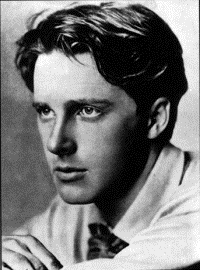
The poem
If I should die, think only this of me: That there's some corner of a foreign field That is for ever England. There shall be In that rich earth a richer dust concealed; A dust whom England bore, shaped, made aware, Gave once her flowers to love, her ways to roam; A body of England's, breathing English air, Washed by the rivers, blest by suns of home. And think, this heart, all evil shed away, A pulse in the eternal mind, no less Gives somewhere back the thoughts by England given; Her sights and sounds; dreams happy as her day; And laughter, learnt of friends; and gentleness, In hearts at peace, under an English heaven.
i want info on Rupert Brooke?
why can't i find any
i want some comments on his poems, made by other famous WWI poets
i also need info. on his poems if any one has any can you please help me out ! thank you ~AnnA~
the only comments on this poem are ppl asking for comments? ah the irony...
Is this poem an English Sonnet?
well guys.... i think this poem is not typically like any other ww1 poem written by a soldier who actually fought in the war. other poets like owen or sassoon comment on the harsh realities and of horrible deaths. but brooke gives a much more pleasant view on the war. he is saying that it will be beautiful and honourable if he should die fighting for his country. i think he is saying that once he dies, he will be in…
Read the whole commentwell guys....
i think this poem is not typically like any other ww1 poem written by a soldier who actually fought in the war. other poets like owen or sassoon comment on the harsh realities and of horrible deaths. but brooke gives a much more pleasant view on the war. he is saying that it will be beautiful and honourable if he should die fighting for his country. i think he is saying that once he dies, he will be in heaven: "under an English heaven". he says that his after life will be just like in England at it's finest.brooke is expressing his pride at being english, and he is a man who dearly loves his counrty and has no objection to the decisions they make and only follows them. he is a soldier that supports the aspect of war, and if it means he is to die painfully; then be it so. a truly great poem which gives me yet another perspective on the feelings of soldiers in the Great War.
I think it is an amazing poem. Rupert Brooke is telling the reader what life would be like after his death. He explains his after life as a place just like England at it's finest and all the bad and evil corruption in the land is not present. Memories are restored of old friends and family, dreams are lived out, the world in which he is discribing is simply beautiful. He tells the reader that when he dies do not worry and grieve and only think that he is in a better place and awaits for his friends and others to come join him one day.
the poem is really a good side of war. Brooke wants the reader to know that dying foe ones country is a patriotic thing to do.
I have read and reread Rupert's poems. I love his insight on life and the meaning of it. And his views of death, when he speaks of the loss of youth, of life, of the children these youth men who have died in vain, would never have,,,such insight.
It is stated that Rupert Brooke did not infact see any combat. Brooks developed sepsis from an infected mosquito bite. He died at 4.46 pm on 23 April 1915 in a French hospital ship moored in a bay off the island of Skyros in the Aegean on his way to a battle at Gallipoli. This could be the reason that his poems are so different to Wilfred Owen, as he did not experience the harshness of war at first hand.