The poem
Bent double, like old beggars under sacks, Knock-kneed, coughing like hags, we cursed through sludge, Till on the haunting flares we turned our backs And towards our distant rest began to trudge. Men marched asleep. Many had lost their boots But limped on, blood-shod. All went lame; all blind; Drunk with fatigue; deaf even to the hoots Of tired, outstripped Five-Nines that dropped behind.
Gas! GAS! Quick, boys!--An ecstasy of fumbling Fitting the clumsy helmets just in time; But someone still was yelling out and stumbling, And flound'ring like a man in fire or lime... Dim, through the misty panes and thick green light, As under a green sea, I saw him drowning.
In all my dreams, before my helpless sight, He plunges at me, guttering, choking, drowning.
If in some smothering dreams you too could pace Behind the wagon that we flung him in, And watch the white eyes writhing in his face, His hanging face, like a devil's sick of sin; If you could hear, at every jolt, the blood Come gargling from the froth-corrupted lungs Obscene as cancer, bitter as the cud Of vile, incurable sores on innocent tongues,-- My friend, you would not tell with such high zest To children ardent for some desperate glory, The old Lie: Dulce et decorum est Pro patria mori.
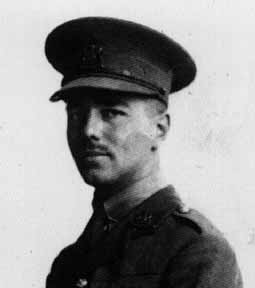
This Poem "Dulce et Decorum est" was written by Wilfred Owen while he was in Hospital.
The phrase "Dulce et Decorum est" means that it is good to fight for your country and you will die in honour. But Wilfred's poem isn't related to that, the poem suggests that war is a missery and is not a good thing to be a part of, yet still the people of today cannot see that.
Dulce et decorum est means "It is sweet and meet to die for ones country" the whole poem contradicts this comment. Owen believed that the war was a shambles...Just as Siegfried sassoon did.
"Dulce et Decorum est" is the title which means it is noble and sweet... and "Dulce et Decorum est in patria mori means it is noble and sweet to die for ones country...
This poem is great, but unfortunately it is typically misinterpreted. It is Not about war. It is an erudite reference to his secret homosexual love life. Hence his cry "Quick boys." He is going crazy with love which is why he farts- "Gas, Gas." His life has sent him on a path to drugs- "ecstacy," and he wishes that he could go back to leave a normal life. His life now is as he says "vile" "obscene as cancer" and he is living "that old lie."
I like that poem very much.It was written in hard situations:when Wilfred Owen was at hospital during the first war world. The poem presents a living experience coverd by the horrors of war and its dangers. I hope you enjoy my humble comment and get use of it.
This poem presents how war is harsh,distructive and spiteful.One must remember (The harsh Anglo-American War)on Iraq as he read war poems.
What an amazing poem. I advise every body to read it.
I had to do a paper on this poem and I really like it. did you notice the repeated images -- drowning, stumbling, and sleeping? He was an amazing writer, and the comment about him being gay is BS (no offense, but that is REALLY stretching it).
it is one of owen's greatest masterpiece. it reflects the horrors that soldiers face while they are on the battlefield. it is a personal poem and brings out the pity of war. the recurrent nightmares that owen experienced, shows how sorry he felt for his platoon.
Yes I think war is horrible, but is the best thing for an economy. ya.
I agree with you Rania Muslim. War is teerible and its effects are certainly disastrous. the world should say:(no for war...Yes for peace ...)
Since the poet Wilfred Owen emphasized that his aim from writing war poetry is to reveal (war and the pity of war), as mentioned in his preface, the poem''Dulce Et Decorum Est'' shows this tendency very clearly and in wonderful portrayed picture...
What an effective poem!!!...War is a terrific experience and Owen tend to portrait this experience which he had while fighting in the first war world...
WAR is great i am totally for it GO WAR without it the world would not work. Peace just wouldnt benefit this world. Without conflict the world is an ugly place.
This is a great poem. It really gives an insight to harsh realities that the soldiers went through at the time. I am doing an essay on it at the moment and i am enjoying it very much.
Dulce et Decorum est
The title of this poem is ironic.
There is a sense of doubleness about this poem, from the beginning, with the ironic title.This doubleness can be seen again in the line "an ecstacy of fumbling". The poet combines words of love and death in this line.
The horrors of war are made clear in this poem. Owen does not spare the reader any gory details. The awfulness of the whole experience of a soldier is vividly described.
At the end of the poem, the reader is utterly convinced of the stupidity and ignorance of the phrase "It is sweet and noble to die for ones country".
Owen's command of the English language allows the reader to get right there in the scene with graphic imagery which "Guttering, choking, drowning". These show not only how the man is suffering but the terrible pain he is enduring as he slowly dies. Owen's images are sometimes too realistic!
Dulce et Docorum Est Dulcet et Decorum Est. one of Wilfred Owen’s most quoted pomes, is a recount of the horrors of war and, in particular, the gruesome and hunting gas attacks. It is a poem written to confront the propaganda of the nobility of war and the glory of human sacrifice. The amount of loss and destruction in the First World War was unprecedented and we should remember the sacrifices that were made if we…
Read the whole commentDulce et Docorum Est
Dulcet et Decorum Est. one of Wilfred Owen’s most quoted pomes, is a recount of the horrors of war and, in particular, the gruesome and hunting gas attacks. It is a poem written to confront the propaganda of the nobility of war and the glory of human sacrifice. The amount of loss and destruction in the First World War was unprecedented and we should remember the sacrifices that were made if we are to prevent future wars.
The title of the poem Dulcet et Decorum Est. is only the first part of the saying Dulcet et Decorum Est pro Patria mori. When translated the saying goes ‘it is a sweet and decorous thing to die for ones country’ but the title of Owen’s poem only says ‘it is a sweet and decorous thing’. Owen then proceeds with his poem attempting to describe this alleged ‘sweet and decorous thing’.
The opening line contains two similes which compare the solders to beggars and hags ‘bent double, like old beggars under sacks’, ‘coughing like hags.’ This is not how we would portray young, fit, keen solders, but the fact of the matter is that they are no longer fit, they are no longer keen and they barely remain soldiers. War has aged and deteriorated them so much so that they are now compared to hags and beggars. Showing us that war is neither ‘sweet’ nor ‘decorous’.
Owen continues his description of the solders with the lines
“All went lame; all blind
Drunk with fatigue; deaf even to the hoots
Of tired, outstripped Five-Nines that dropped behind.”
The lines ‘All went lame; all blind’, ‘Drunk with fatigue; deaf’ further describe the their disabilities and to the extent at which war has effected them. The word all is all encompassing which is saying that every one is affected, on one is spared. Further emphasising that war is neither ‘sweet’ nor ‘decorous’.
The onomatopoeia of ‘hoots’ and ‘dropped’ is an attempt to capture the sound of the 5.9 Calabar shells, with them hooting over head and dropping behind. The description of the five-nines, ‘tired, out striped’ shows us that they are no longer intimidating or that there is not enough energy left in the soldiers to be intimidated, even though they are dangerously life threatening. Further showing the deteriorated state of the soldiers.
In the second stanza the poem begins its description of the gas attacks which is the central topic and the most described, because it is such a terrifying way to die. The pase increases with the outburst of warning
“Gas! Gas! Quick boys!”
to show the urgency of the situation. Considering the speed that they must react and the state at which they are in, a gas attach is a very dangerous situation. Owen uses the word boys which reminds us of their youth, but having already described them as aged and disabled we come to the realisation that their youth was stolen, and we are also confronted with the concept that they are innocent victims within the war.
“But someone still was yelling out and stumbling”
This is the line where Owen begins his vivid and chilling description of a gas attack death, which is his strongest argument against ‘the old lie’. The line has matter-of-fact tone which gives a lack of sympathy feal. It is introducing us to the situation this soldier is in from a third person view. The next line;
“And flound’ring like a man in fire of lime”
describes the helplessness of the soldier. Owen is showing us that war can be random and the soldiers’ lives are left up to chance. This man is floundering he has no control at all.
“Dim, through the misty panes and thick green light,”
The word ‘Dim’ in this line has a lot of signifence and meaning. This is pointed out to us through the punctuation; more specifically the comma that separates it from the rest of the line.it operates on many levels. Firstly it describes the scene, the light, giving it an eerie and gloomy feal, one with little hope. Secondly, it describes the chances this soldier has, having shown us that war can be left up to chance, Owen is describing the chances or odds this boy now has for survival. And thirdly it describes the soldier him self, he knows the chances and odds he has and is now ‘Dim’, hopeless; his spirit has taken its final blow. The rest of the line is a description of the scene, which leads into the next line;
“As under a green sea, I saw him drowning”
The second half, ‘I saw him drowning’, (which are the last words of the stanza) is the first of a very few times Owen directly refers to himself. This is to personify the entire poem, to make it much more real to the reader. It is showing us that all the horrors Owen has described and will describe are all personal experiences.
The next stanza consists of two lines and is the only other time that Owen addresses himself.
“In all my dreams, before my helpless sight,
He plunges at me, guttering, choking, drowning.”
It is in Owens dreams, it is before Owens helpless sight, the boy plunges him self at Owen. We can never know these horrors because we were not in Owen’s place. These visions have haunted him and all he is doing is attempt to merely describe them, we will never know these horrors to the extent that Owen does.
This is outlined in the last stanza with the repetition of the word If.
“If in some smothering dreams you too could pace
Behind the wagon that we flung him in,
And watch the white eyes writhing in his face,
His hanging face, like the devils sick of sin;”
These fore lines are the first third of the stanza and say to us IF! If we could experience these things, that have only been described, described with words like smothering, flung, writhing, hanging and with a metaphor ‘like a devils sick of sin’… the next fore lines continue this If concept.
“If you could here, at every jolt, the blood
Come gargling from the froth-corrupted lungs,
Obscene as cancer, bitter as the cud
Of vile, in curable sores on innocent tongues,-”
‘IF! You could hear’. These eight lines of this stanza tell us that we cannot know the real thing, but If! we could, then;
“My friend, you would not tall with such high zest
To children ardent for some desperate glory
The old Lie: Dulce et decouum est
Pro patria mori.”
This is Owen’s point, you do not know the horrors of war, so do not speak falsies of it. On a last note, Owen saved the last part of the saying ‘Pro patria mori’ for the end. This is the only time these words are mentioned and translate to ‘to die for ones country’.
lives on the others like a worm that crawls to eat leaves and other things not worrying about any ideals yet in this poem the comparison was only to shade some light on how and what stage and state the solder after living the anguish of war and looking at his mates passed away or about to. Pain, hanger, thirst, lake of sleep and not able to rest. All of this can make a tough, young fit solder just like a bagger…
Read the whole commentlives on the others like a worm that crawls to eat leaves and other things not worrying about any ideals yet in this poem the comparison was only to shade some light on how and what stage and state the solder after living the anguish of war and looking at his mates passed away or about to. Pain, hanger, thirst, lake of sleep and not able to rest. All of this can make a tough, young fit solder just like a bagger whose interest is simply to satisfy the current needs regardless of the ethics and morels. Looking at the stanza when one solder screams GAS GAS is another sad story for us to hear yet it was a nightmare to solders who inhaled the gas and a terror story for other solders looking at GAS entering the helpless bodies and exiting a soul out it's container. Yes this is a true story of war.
it's unfair comparsion between a man who stand for his country or right and the man who lives on the others like a worm that crawls to eat leaves and other things not worrying about any ideals yet in this poem the comparison was only to shade some light on how and what stage and state the solder after living the anguish of war and looking at his mates passed away or about to. Pain, hanger, thirst, lake of sleep and…
Read the whole commentit's unfair comparsion between a man who stand for his country or right and the man who lives on the others like a worm that crawls to eat leaves and other things not worrying about any ideals yet in this poem the comparison was only to shade some light on how and what stage and state the solder after living the anguish of war and looking at his mates passed away or about to. Pain, hanger, thirst, lake of sleep and not able to rest. All of this can make a tough, young fit solder just like a bagger whose interest is simply to satisfy the current needs regardless of the ethics and morels. Looking at the stanza when one solder screams GAS GAS is another sad story for us to hear yet it was a nightmare to solders who inhaled the gas and a terror story for other solders looking at GAS entering the helpless bodies and exiting a soul out it's container. Yes this is a true story of war.
Sorry the first line was dropped by mistake.
this poem gives a real insite into the massicre of the war. We see the pain and torture of seeing fellow soldiers die.
Anyone view the poem's structure paralleling that of a story? The first stanza introduces the setting of trench warfare and the soldiers. The second stanza is the rising action with the advent and result of the gas. The third stanza, the shortest, is the climax, when the speaker realizes the true pain behind death when the soldier's death emotionally "plunges" at the speaker. The fourth stanza is the falling action…
Read the whole commentAnyone view the poem's structure paralleling that of a story? The first stanza introduces the setting of trench warfare and the soldiers. The second stanza is the rising action with the advent and result of the gas. The third stanza, the shortest, is the climax, when the speaker realizes the true pain behind death when the soldier's death emotionally "plunges" at the speaker. The fourth stanza is the falling action and describes the speaker's further realization on the condition of death in WWI--the soldiers don't just die, they drown (notice how die / death is not used in the poem). The poem ends with the speaker's conclusion from this incident--it is neither sweet nor graceful to die for one's country.
The correct title is "Dulce et decorum est," not "Dulcet....."
We covered this poem in college as an example of descriptive language, and how!
If I might add to the many remarks made here, the saying comes from a Roman poet, I think Ovid, in praise of war and warriors. Additionally the closing remark about telling war stories to our children in it would be wise to include this one.
Correction, The Roman poet was Horace not Ovid
home business lead mlm c
good worck The Adult Literacy Resource Institute (A.L.R.I.) is a program and staff development center for adult literacy basic education and English for speakers of ...
senks
I’d prefer reading in my native language, because my knowledge of your languange is no so well. But it was interesting! Look for some my links:
Arms and the Boy
hey can any1 answer these questions 4 me please!!
1) consider the first two stanzas of the poem.What is the speaker suggesting the boy should do?
2) Stanza 3 mentions things that the boy does NOT have.Identify the things the boy lacks and state why his lacking them is significant.
3)Quote TWO phrases from the poem that makes us feel that the boy should be doing something other than what is suggested in the first two stanzas.
THANK YOU 2 WHOEVER ANSWERED THESE QUESTIONS....=-)