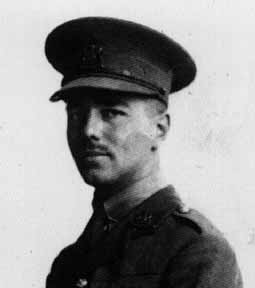
The poem
Move him into the sun -- Gently its touch awoke him once, At home, whispering of fields unsown. Always it woke him, even in France, Until this morning and this snow. If anything might rouse him now The kind old sun will know.
Think how it wakes the seeds -- Woke, once, the clays of a cold star. Are limbs so dear-achieved, are sides Full-nerved, -- still warm, -- too hard to stir? Was it for this the clay grew tall? -- O what made fatuous sunbeams toil To break earth's sleep at all?
This poem is an elegy about someone who has just died. The tone is gentle, with images of the sun and nature. There is a sense of nature's path, the circle of life, in this poem. The poet is desperate for the sun to awaken the dead person, as it used to every morning when that person was alive. The poem contrasts life with death. This is also a poem of outrage. The poet is outraged at the fact that the sun cannot…
Read the whole commentThis poem is an elegy about someone who has just died. The tone is gentle, with images of the sun and nature. There is a sense of nature's path, the circle of life, in this poem. The poet is desperate for the sun to awaken the dead person, as it used to every morning when that person was alive. The poem contrasts life with death. This is also a poem of outrage. The poet is outraged at the fact that the sun cannot awaken his friend whose body is still warm, so close to life, yet too far. The theme of the poem is the meaninglessness of life, creation and human existance. W. Owen is grieving about his friend and also about the cruelty of war and the state of the human condition. Nature's course of life and death is disrupted by war.
Through out the poem the tone is gentle and links with the sun and nature.Every morning he was awake,but 'Until this morning and this snow.If anything might arouse him now. The kind old sun will know.' shows how desperate he trys to awaken the dead soilder under the sun.But it was useless.
Then it starts to descibe the soilder 'Are limbs so dear-achieved, are sides
Full-nerved, --still warm,--too hard to stir?'
shows that why can't the sun awaken him?
then by using the questions,W.owen leads us to the message of the poem:
If we are just created to be sacrificed or killed, Why create us at all?
tells us it is useless creating human which we can see why the title is called 'Fultility'.
Throughout this poem, Owen try’s to convey the same feelings of senselessness of war as depicted in “Dulce”, “Anthem for Doomed Youth” and “The Last Laugh”. In the first line, Owen highlights the indiscriminate nature of war by labelling a soldier, slain as an offering for war, as “him”. The first line of the poem also introduces the personified, life-giving sun. The sun itself is depicted in positive terms…
Read the whole commentThroughout this poem, Owen try’s to convey the same feelings of senselessness of war as depicted in “Dulce”, “Anthem for Doomed Youth” and “The Last Laugh”. In the first line, Owen highlights the indiscriminate nature of war by labelling a soldier, slain as an offering for war, as “him”. The first line of the poem also introduces the personified, life-giving sun. The sun itself is depicted in positive terms throughout this poem and is used by Owen as a metaphor for life, “how it wakes the (dead) seads- Woke, once, the clays of a cold star.” The responder realises that the commanding nature of the first line is but a plea for the survival of the poet’s friend. The optimistic tones of the 2nd through 7th lines of the poem portray the composer, working himself up to a futile hope that the sun will be able to fix his friend.
The tone of the second stanza is of bitterness and reminiscence. Throughout this stanza Owen ponders questions that a death stirs, and is sure that the sun is cheating him “Think of how it wakes the seeds- are limbs, so dear, to hard to stir?” The rhetorical questions asked force the responder to consider the futility of war “Why can’t the sun awake my friend this time? Were we created just to get shot-down on a battlefield? If this is all life is for is it really worth living?” The anger and loss of hope in this stanza help keep Owen’s hold on the responder firm.
Owen immediately draws the responder with a command as the first word of each stanza. He forces the responder to listen to him in his hope and his bitterness. The personification of the “whispering fields unsown”, are the dreams for the future of each young man slain in service. The emphasis of “Always” forms the basis of the emotion in the passage. The contrast of the sun and the snow moves from the sun’s gift of life to the paleness of death that snow personifies. Owen compares seeds to soldiers, juxtaposing the dead seed that will bring forth all sorts of glorious life and colours to the dead soldiers, and the life they might have had. As the tone changes, from hope in the first stanza to the anger and reflection of Owen’s questions, the responder is moved to appreciate the life that they live without the stresses of war.
i completly agree with Adam from Australia and would like to add that becouse owen called the person "him" owen is saying that the solder ,through war, has lost his individuality
WHO IS HIM IN THE POEM??
WHO IS THE SPEAKER IN THE POEM??
is the theme only about war that is pointless?
In the poem 'Futility' Wilfred Owen appears to be an apostle of peace and creation. He argued in favour of creative process that prevails in the universe. But the warmongers try to dirsupt the process by organising massacre of youthful lives.The sun is vigorous in his creation. The sun is the very source of life . The futility is still more important a subject. The efforts of the sun are all futile, not because it has failed to restore life to the dead soldier.The futility becomes more apparent when the sun finds its creation destroyed- the decaying body of the soldier. War , the destructive power seems to be more powerful than the sun , the very source of life iteself.
"Futility" is Owen's one of the best poems relating to the World War-1. Both the stanzas of the poem begin with imperatives--"move" in the first stanza and "think" in the second stanza--one being descriptive and another reflective. So the former implies an action and the latter a reflection.These two words clearly point to the futility of the speaker's intention. The speaker commands another to "move" the dead…
Read the whole comment"Futility" is Owen's one of the best poems relating to the World War-1. Both the stanzas of the poem begin with imperatives--"move" in the first stanza and "think" in the second stanza--one being descriptive and another reflective. So the former implies an action and the latter a reflection.These two words clearly point to the futility of the speaker's intention. The speaker commands another to "move" the dead soldier in the sun ,but the sun is not able to revive the dead; so this act demands thinking because the action results in nothingness and therefore it is time for thinking and not for action.So much are said about heroism of the war; but now people should shun these false ideals, and before taking an action they also should "think" of the results that war brings.
If we suppose that the first stanza is about the performance of the act of laying the dead soldier in the sun, the stands for the failure of the sun's promise and power of creation.Likewise i think that the poet seems to convey by placing these two verbs in the beginning of the stanzas, the fact that what we are losing in war is out of revival and renewal. Therefore, we are not progressing but retreating to our primitiveness without 'thinking' our march.
Governing topic and theme in the poem.
Guys, this poem is lol.
It's just about Jesus and ting.
poetry
adam dude. in australia what the heck are you on about. ive got an assignment on futility poem analysis and dont noe wat you say.
Futility by wilfred owen
this is one of the most powerful poems of war that i have read
what a good poem! he really makes the reader know exactly how to feel if he or she was in a war.
will fred owen futility
if u are doing this poem it mean ure english is a fat amricain