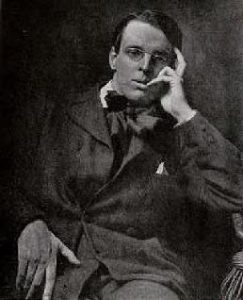
The poem
I ranted to the knave and fool, But outgrew that school, Would transform the part, Fit audience found, but cannot rule My fanatic heart.
I sought my betters: though in each Fine manners, liberal speech, Turn hatred into sport, Nothing said or done can reach My fanatic heart.
Out of Ireland have we come. Great hatred, little room, Maimed us at the start. I carry from my mother's womb A fanatic heart.
In an editorial in the NY Times of 8.17.05 Thomas Lynch includes the last stanza of "Remorse for Intemperate Speech" and says, "His (Yeats's) poem confesses and laments that reason and breeding, imagination and good intentions are nonetheless trumped by the contagion of hatred and by the human propensity toward extreme and unquestioning enthusiasm for a cuase - whatever cause." And he concludes, "We may be…
Read the whole commentIn an editorial in the NY Times of 8.17.05 Thomas Lynch includes the last stanza of "Remorse for Intemperate Speech" and says, "His (Yeats's) poem confesses and laments that reason and breeding, imagination and good intentions are nonetheless trumped by the contagion of hatred and by the human propensity toward extreme and unquestioning enthusiasm for a cuase - whatever cause."
And he concludes, "We may be irreversibly committed to play out the saga of Iraq. But each of us, we humans, if we are to look our own kind in the eye, should at least be willing to say we're sorry, that all over our smaller and more lethal planet, whatever the causes, we're still killing our own kind - the same but different - but our own kind nonetheless. Even on vacation we oughtn't hide from that."
Re: Comments via Frank Stephenson I'd previously considered Thomas Lynch's NY Times editorial of 8.17.05 as quoted by Frank S. and appreciate his making the connection to "Remorse..." First, as to the poem itself I was not so convinced of what exactly makes up a "...fanatic hear," as was Lynch. Much more than "hatred" or "unquestioning enthusiasm for a cuase(sic)" I trust. A fanatic heart is to each person what they…
Read the whole commentRe: Comments via Frank Stephenson
I'd previously considered Thomas Lynch's NY Times editorial of 8.17.05 as quoted by Frank S. and appreciate his making the connection to "Remorse..."
First, as to the poem itself I was not so convinced of what exactly makes up a "...fanatic hear," as was Lynch. Much more than "hatred" or "unquestioning enthusiasm for a cuase(sic)" I trust. A fanatic heart is to each person what they are most impressed by (positively or otherwise) in their own heart, for the "Remorse..." is not so much remorse as an plaintive excuse for our own misgivings, one could argue.
Thus Lynch went a bit too far in describing what Yeats had meant by a fanatic heart. And certainly stretched the "Hatred and Cause" excuses a "metaphor too far" and unfairly too, as he insinuates that President Bush is hiding from the fact he should say he is sorry... Are we to suppose we know what he feels, and know the multitudinous concerns he must juggle such that he could say more clearly he is sorry?
But in any case juxtaposing the editorial with the poem gave food for thought! Thanx gj